


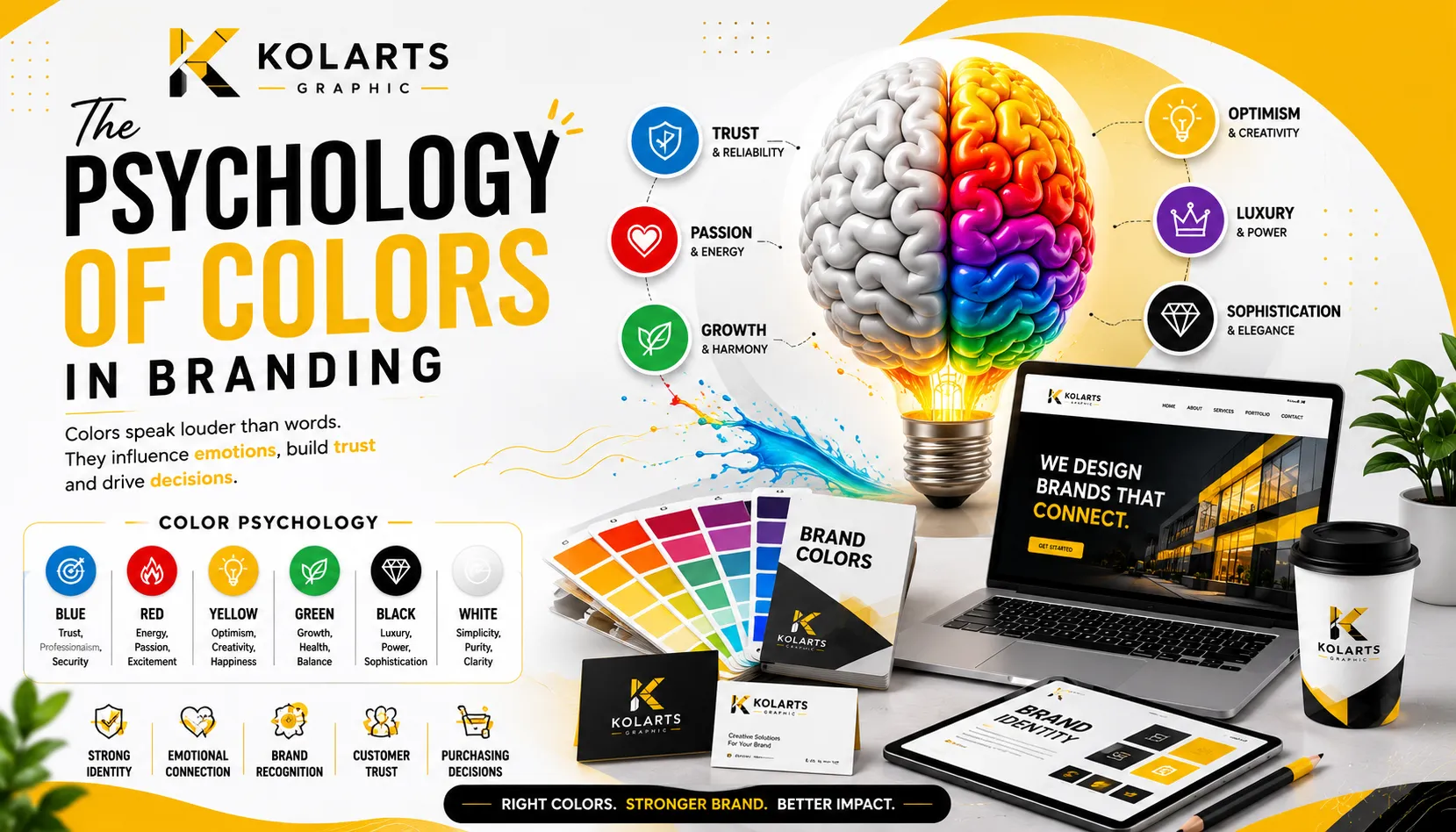
Colors are more powerful than most businesses realize. Before customers read your message, explore your website, or learn about your services, they notice your colors.
The colors used in your branding can influence emotions, shape perceptions, and even impact purchasing decisions. This is why some of the world’s most successful brands invest heavily in choosing the right color palette.
Understanding color psychology can help businesses create stronger brand identities, attract the right audience, and build lasting customer relationships.
What is Color Psychology?
Color psychology is the study of how colors influence human emotions, behaviors, and decision-making.
Different colors trigger different emotional responses. While individual experiences and cultural differences can affect perception, certain color associations are widely recognized and used in marketing and branding.
Businesses use color psychology to communicate their personality, values, and message more effectively.
Why Colors Matter in Branding
Color is often one of the first things people notice about a brand.
A carefully selected color palette can help businesses:
- Increase brand recognition
- Build trust and credibility
- Create emotional connections
- Differentiate from competitors
- Influence purchasing decisions
Consistent use of colors across websites, social media, packaging, and marketing materials helps strengthen brand identity over time.
How Colors Influence Customer Perception
Customers often make judgments about a brand within seconds.
Colors can communicate messages such as:
- Trustworthiness
- Luxury
- Innovation
- Reliability
- Creativity
- Excitement
The right colors help align customer perception with the brand’s intended message.
Understanding Common Brand Colors
Blue: Trust and Professionalism
Blue is one of the most popular colors in branding.
It is often associated with:
- Trust
- Reliability
- Security
- Professionalism
Many technology, finance, and corporate businesses use blue to establish credibility and confidence.
Red: Energy and Excitement
Red is a bold and attention-grabbing color.
It often represents:
- Passion
- Energy
- Urgency
- Confidence
Brands use red to create excitement and encourage action.
Yellow: Optimism and Creativity
Yellow is energetic, cheerful, and attention-grabbing.
It is commonly associated with:
- Positivity
- Creativity
- Innovation
- Optimism
Yellow can help brands appear friendly, modern, and approachable.
Green: Growth and Balance
Green is strongly connected to nature and sustainability.
It often communicates:
- Growth
- Health
- Freshness
- Stability
Many environmental, wellness, and financial brands use green in their branding.
Black: Luxury and Sophistication
Black is often used to create a premium and elegant image.
It is associated with:
- Luxury
- Power
- Sophistication
- Exclusivity
Many luxury brands rely on black to create a high-end appearance.
White: Simplicity and Cleanliness
White represents clarity and simplicity.
It often communicates:
- Minimalism
- Transparency
- Purity
- Modernity
Many modern brands use white space to create clean and professional designs.
The Importance of Color Combinations
Individual colors are important, but how they work together matters even more.
Successful brands often use a combination of colors to create balance and strengthen their message.
For example:
- Black and Gold for luxury
- Blue and White for trust and professionalism
- Yellow and Black for creativity and confidence
- Green and White for freshness and sustainability
The right color combination helps create a memorable visual identity.
How Colors Impact Buying Decisions
Color influences customer behavior more than many businesses realize.
Customers often make emotional decisions before making logical ones.
Colors can:
- Capture attention
- Improve brand recall
- Encourage engagement
- Influence purchasing decisions
- Strengthen emotional connections
This is why color selection should be a strategic branding decision rather than a personal preference.
Choosing the Right Colors for Your Brand
When selecting brand colors, businesses should consider:
Target Audience
Different audiences may respond differently to colors.
Understanding your customers helps ensure your branding resonates with the right people.
Industry Positioning
Certain industries naturally favor specific colors.
For example:
- Technology companies often use blue.
- Luxury brands frequently use black.
- Creative agencies often use bold and vibrant colors.
Brand Personality
Ask yourself:
- Is the brand professional?
- Is it creative?
- Is it innovative?
- Is it luxurious?
- Is it approachable?
The chosen colors should reflect the brand’s personality.
Common Color Branding Mistakes
Many businesses make branding mistakes by:
- Using too many colors
- Following trends without a strategy
- Ignoring consistency
- Choosing colors based solely on personal preference
- Creating poor color contrast
These mistakes can weaken brand recognition and reduce professionalism.
Why Consistency Matters
Once a business establishes its brand colors, consistency becomes essential.
Customers should see the same color palette across:
- Website design
- Social media platforms
- Marketing materials
- Packaging
- Advertisements
- Business documents
Consistent branding helps create stronger recognition and trust.
The Future of Color in Branding
As digital experiences continue to evolve, color will remain one of the most important elements of branding.
Emerging trends include:
- Minimalist color palettes
- High-contrast designs
- Accessibility-focused color systems
- Personalized digital experiences
- Dynamic branding systems
Brands that use color strategically will continue to create stronger emotional connections with their audiences.
Conclusion
Colors are far more than decorative elements. They are powerful communication tools that influence how customers perceive, remember, and interact with a brand.
The right color palette can help businesses build trust, create emotional connections, improve recognition, and stand out in competitive markets.
Whether you’re creating a new brand or refreshing an existing one, understanding the psychology of colors can help you make smarter branding decisions and build a stronger, more memorable business.
Author: KolArts Graphic
Category: Graphic Design & Branding
Tags: Color Psychology, Branding, Graphic Design, Brand Identity, Brand Colors, Marketing Psychology, Business Branding, Visual Identity